

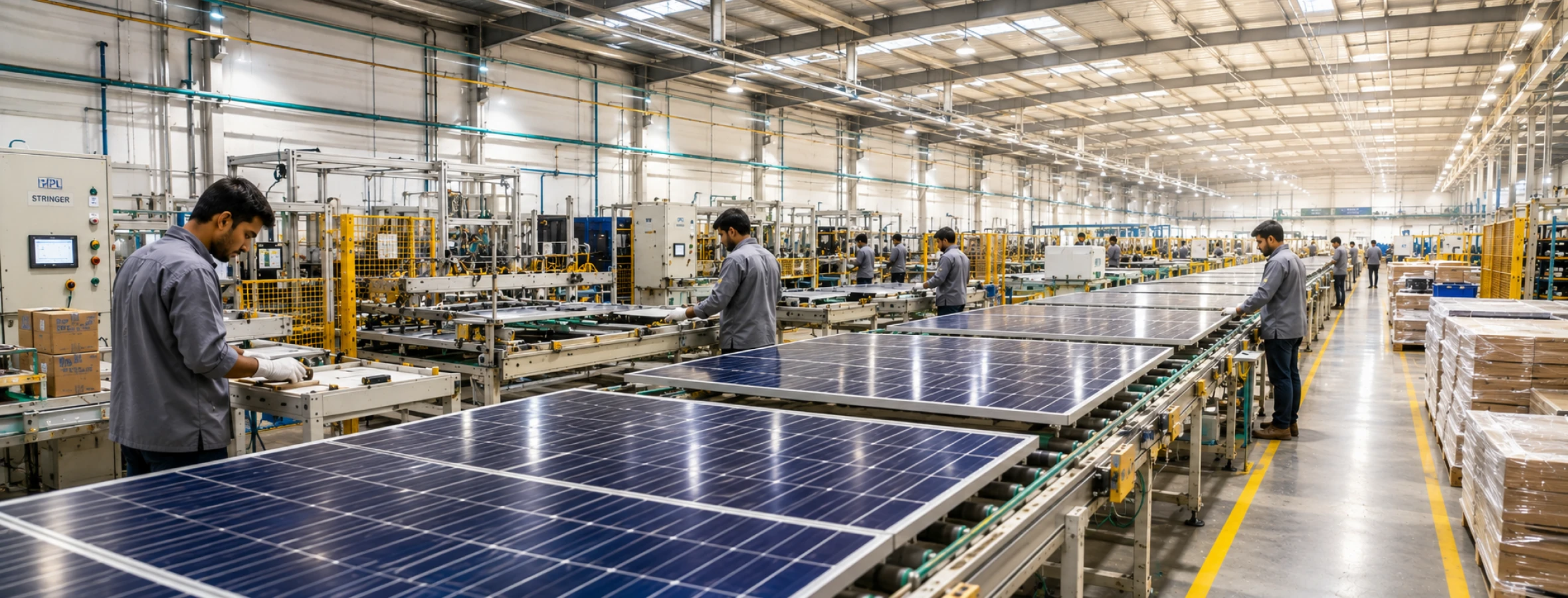
India's renewable energy transition is increasingly being supported by a rapidly expanding domestic manufacturing ecosystem. Alongside becoming one of the world's largest renewable energy markets, the country is also emerging as a major manufacturing destination for solar, energy storage and clean energy technologies.
The most significant progress has been witnessed in solar manufacturing. Supported by the ₹24,000 crore Production Linked Incentive (PLI) Scheme for High Efficiency Solar PV Modules, India's solar module manufacturing capacity has increased from approximately 2.3 GW in 2014 to around 203 GW as of July 2026. During the same period, solar cell manufacturing capacity has grown from around 1.2 GW to approximately 32 GW, representing one of the fastest manufacturing expansions globally.
India is also strengthening upstream capabilities across the solar value chain. The commissioning of the country's first integrated ingot-to-wafer manufacturing facilities marks an important milestone towards reducing import dependence and creating a more resilient domestic manufacturing ecosystem. Policy measures such as the Approved List of Models and Manufacturers (ALMM) and Quality Control Orders have further strengthened quality standards and supply chain reliability.
As global demand for clean energy technologies continues to grow, India is positioning itself as a competitive manufacturing hub capable of serving both domestic and international markets while creating jobs, strengthening industrial competitiveness and enhancing energy security.
At BRE Summit 2026, manufacturers, investors, technology providers and policymakers will explore opportunities across solar manufacturing, battery technologies, supply chain resilience, localisation strategies and global clean energy value chains.