

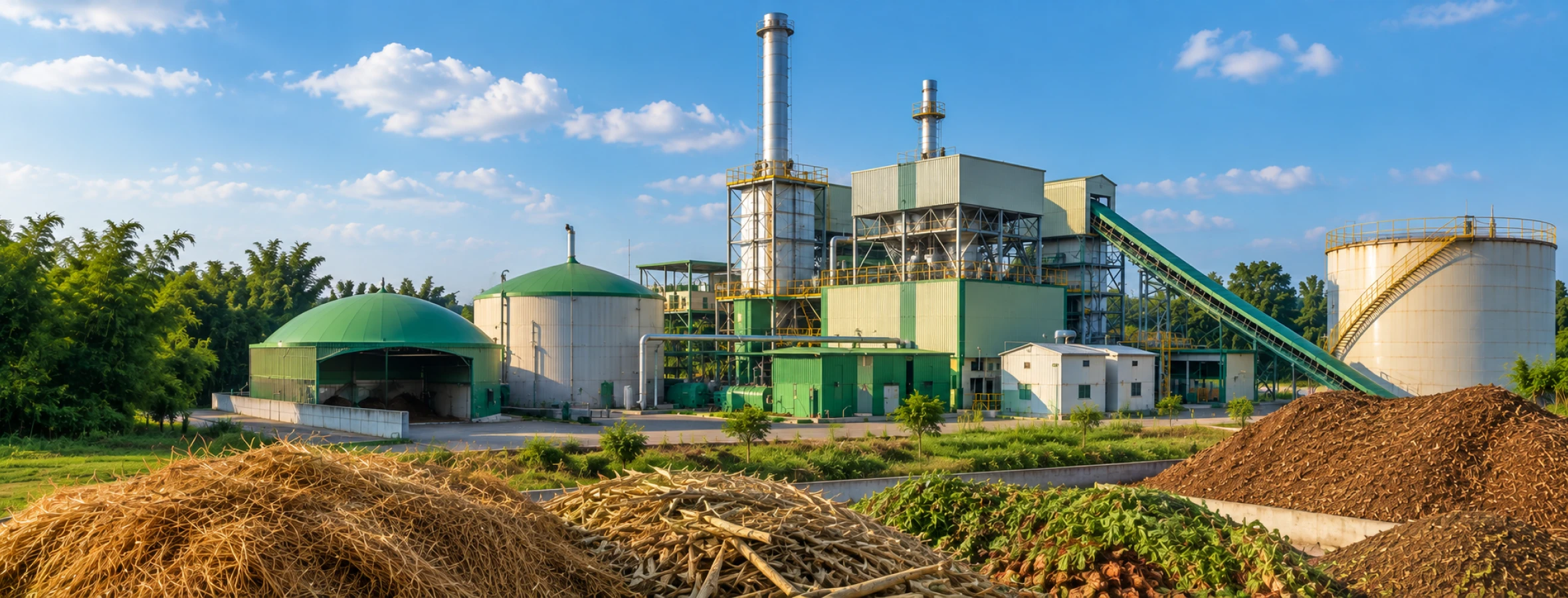
Bioenergy plays a unique role in India's renewable energy ecosystem by simultaneously addressing energy security, waste management, rural livelihoods and environmental sustainability. By utilising agricultural residues, municipal waste, industrial by-products and organic waste streams, bioenergy transforms local resources into clean sources of power, heat and transport fuels.
Over the past decade, India has significantly expanded its bioenergy ecosystem through programmes supporting compressed biogas (CBG), biomass power, cogeneration and waste-to-energy projects. Recognising the country's vast biomass potential, the Government of India has implemented a range of policy measures to encourage the utilisation of agricultural residues and organic waste while reducing open-field burning and associated emissions.
The National Bioenergy Programme provides financial support for waste-to-energy projects, biomass-based power generation and biogas initiatives. Complementing these efforts, the SATAT (Sustainable Alternative Towards Affordable Transportation) Initiative is accelerating the production and adoption of compressed biogas, creating new opportunities for farmers, entrepreneurs and rural communities while supporting India's clean mobility ambitions.
Bioenergy is increasingly recognised as an important contributor to a circular economy, creating value from waste streams while generating employment and strengthening energy resilience at the local level.
At BRE Summit 2026, policymakers, technology providers, project developers and investors will explore opportunities across biomass, compressed biogas, waste-to-energy and next-generation biofuels that can support a more sustainable and resource-efficient energy future.