

11 October 2026


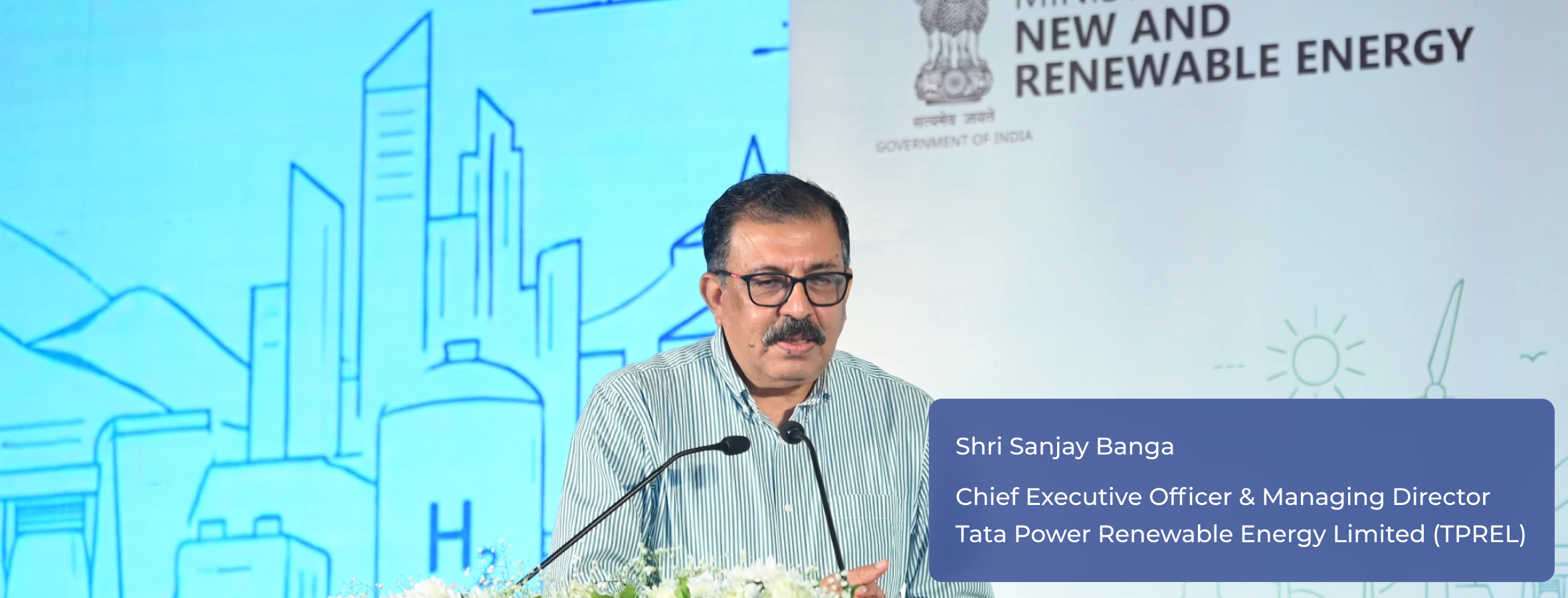
Shri Sanjay Banga
Chief Executive Officer & Managing Director, Tata Power Renewable Energy Limited (TPREL)
Shri Sanjay Banga's closing industry perspective was less about abstract execution frameworks and more about what the renewable-energy sector is becoming: one of India's most progressive engines of industrial growth and employment.
He credited policy consistency and regulatory support—across both project development and manufacturing—with creating the conditions for the sector's recent acceleration.
Banga argued that the growth seen over the last two or three years could become even larger over the coming decade, opening substantial career and employment opportunities.
The manufacturing push, in particular, is moving further upstream—from modules and cells towards wafers and polysilicon—creating the possibility of deeper industrial capability and a broader domestic value chain.
He also spoke from inside the BRESE 2026 core advisory process, noting the regular review meetings that have shaped the Summit tracks.
Among the ideas he highlighted were a hackathon, stronger participation from academia and the inclusion of international stakeholders—elements intended to make the Bharat Renewable Energy Summit global in scope rather than merely national in attendance.
That global dimension, he said, creates a two-way opportunity: Indian industry can learn from international participants while also showcasing what India has already built in renewable energy.
Banga also acknowledged Maharashtra's strong position across PM Surya Ghar, PM-KUSUM and utility-scale development, and thanked the state institutions supporting new renewable-energy policy.
His final commitment was from industry: Maharashtra's renewable-energy sector would participate actively, and participation should increasingly take the form of partnerships.
That distinction matters. The Summit is not intended simply to fill seats; it is intended to create collaborations around technology, manufacturing, innovation and deployment.
For Banga, the next decade will be defined not only by how much renewable capacity India adds, but by how much capability, employment and industrial depth it builds around that growth.
BRESE 2026 becomes the stage on which that capability can be shown to the world.
The industry message from Mumbai was therefore one of confidence: the sector is expanding, the opportunity set is widening, and partnerships will determine how much value India captures from the next phase.
The task now is to build the ecosystem - and take it global.