

10 October 2026


Few numbers describe India’s clean-energy transformation as clearly as the growth of solar over the past decade.
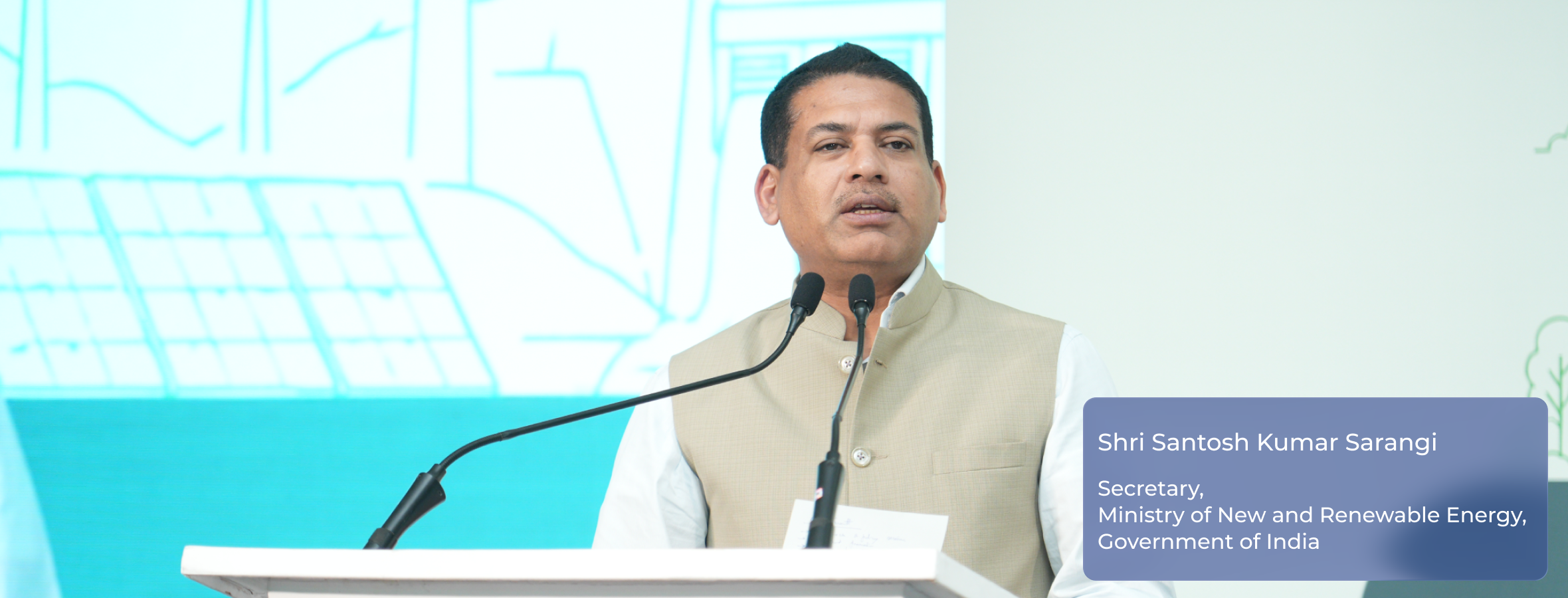
Shri Santosh Kumar Sarangi
Secretary, Ministry of New and Renewable Energy, Government of India
Few numbers describe India’s clean-energy transformation as clearly as the growth of solar over the past decade. In 2014, India had approximately 2.8 GW of installed solar capacity.
By the time Shri Santosh Kumar Sarangi, Secretary, Ministry of New and Renewable Energy, addressed the Bengaluru Roadshow for Bharat Renewable Energy Summit & Expo 2026, that number had reached approximately 168 GW.
Wind power had followed its own substantial trajectory, rising from around 25 GW to approximately 57 GW. And India’s overall installed non-fossil-fuel capacity had crossed 303 GW.
Sarangi placed those numbers within an international context: India now stands as the third-largest renewable-energy player globally, after China and the United States. But his address also made an important point, the growth did not happen by accident. Policy interventions created the conditions for technologies to scale.
Early Generation Based Incentives supported the growth of wind. The Solar Park programme supported approximately 40 GW of solar deployment, while the CPS scheme contributed another approximately 15 GW of solar installations, according to the figures cited in his Bengaluru address.
Now the policy toolkit is evolving again.
Sarangi highlighted the emerging opportunity in floating solar, where eligible projects under the new framework can receive Central Financial Assistance of approximately ₹1 crore per MW. The Pradhan Mantri Surya Sarovar Yojana targets 5,000 MW of floating solar capacity, combined with energy-storage systems.
Battery manufacturing was another area he flagged as part of the next opportunity landscape, reflecting the broader shift from simply producing renewable electricity towards creating a complete domestic clean-energy ecosystem.
This next phase will require grid integration, round-the-clock renewable power, energy storage, domestic manufacturing and access to long-term capital. These areas, Sarangi emphasised, will form important parts of the discussion at BRE Summit 2026.
His message to Karnataka was especially relevant.
The state already possesses many of India’s strongest manufacturers, technology companies and innovation capabilities. Sarangi urged both the State Government and Karnataka’s entrepreneurs and manufacturers to use BRE Summit 2026 to showcase that capability—to investors, policymakers, international partners and the wider renewable-energy ecosystem.
Because India’s renewable-energy story has already demonstrated what can happen when policy creates scale.
The next chapter is about using that scale to build technology, manufacturing and investment capability at home.